Held Ground
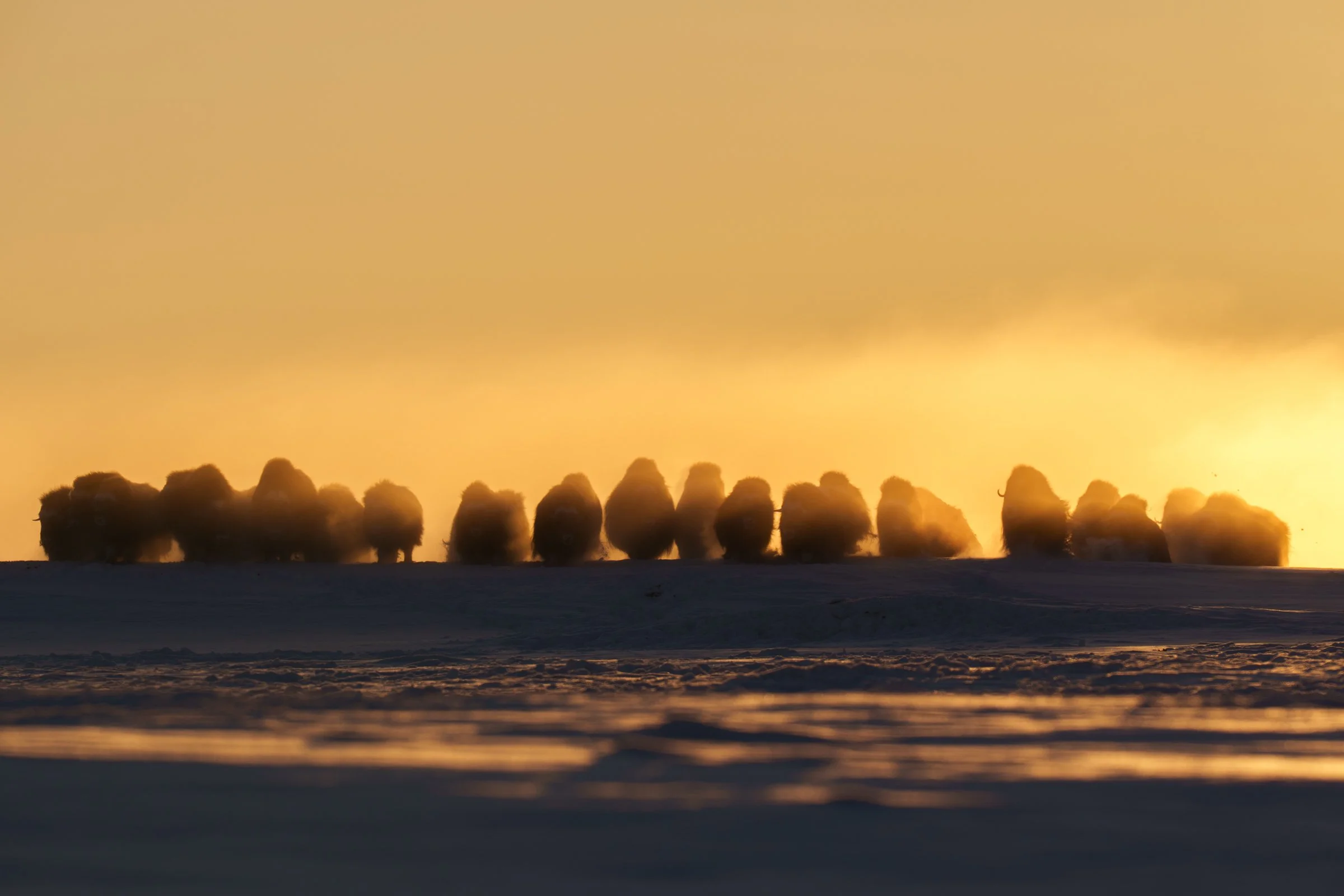
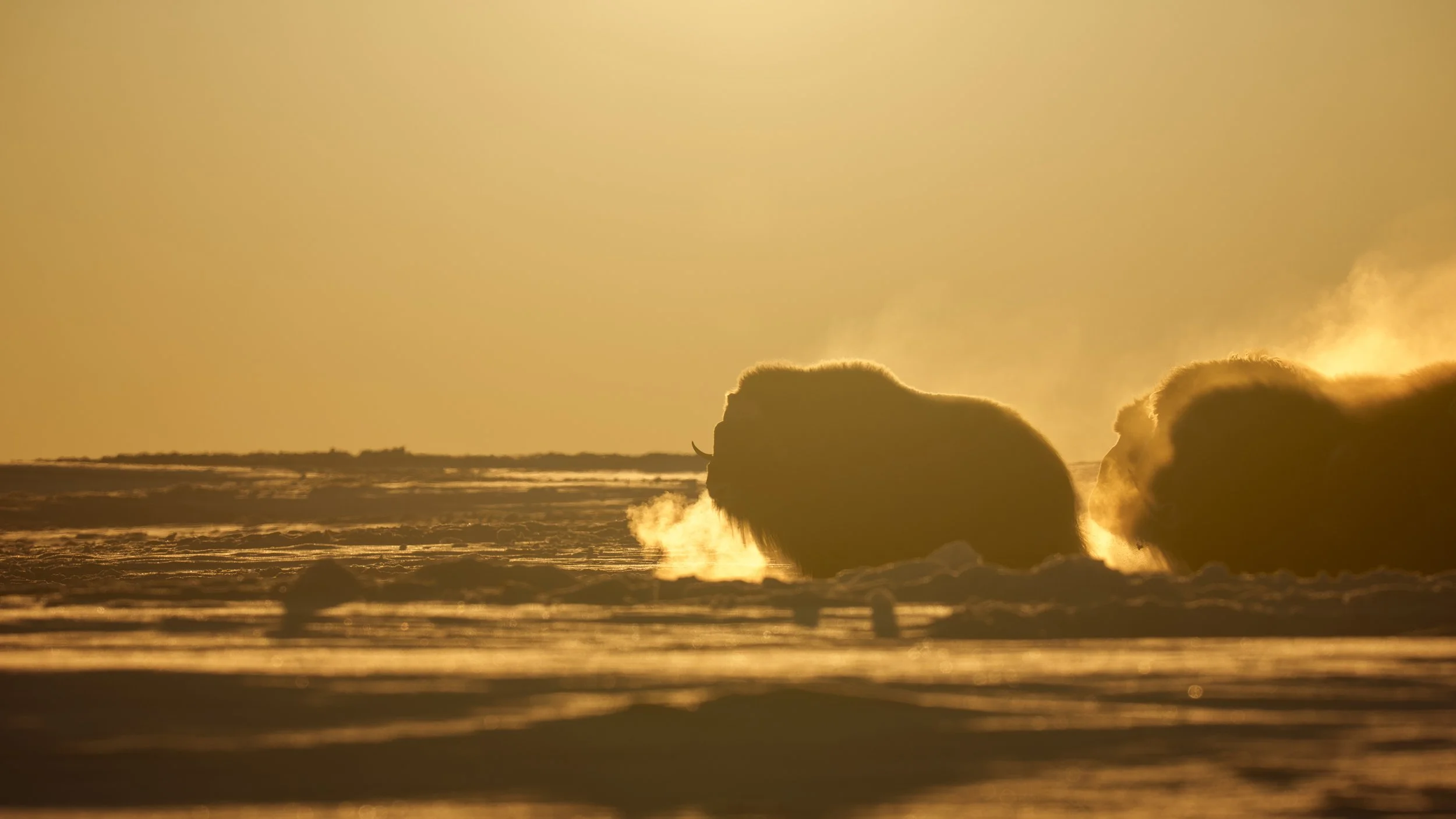
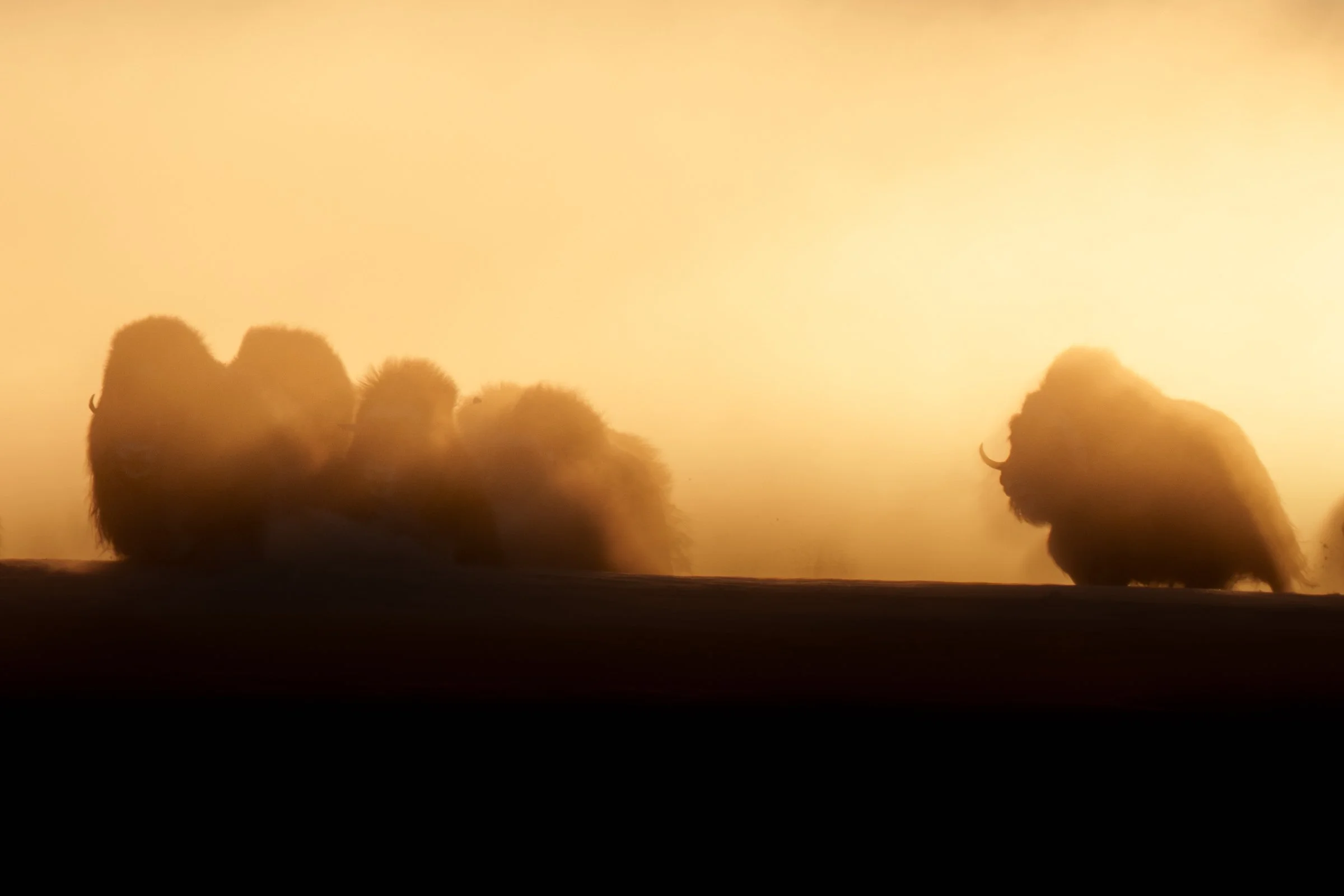
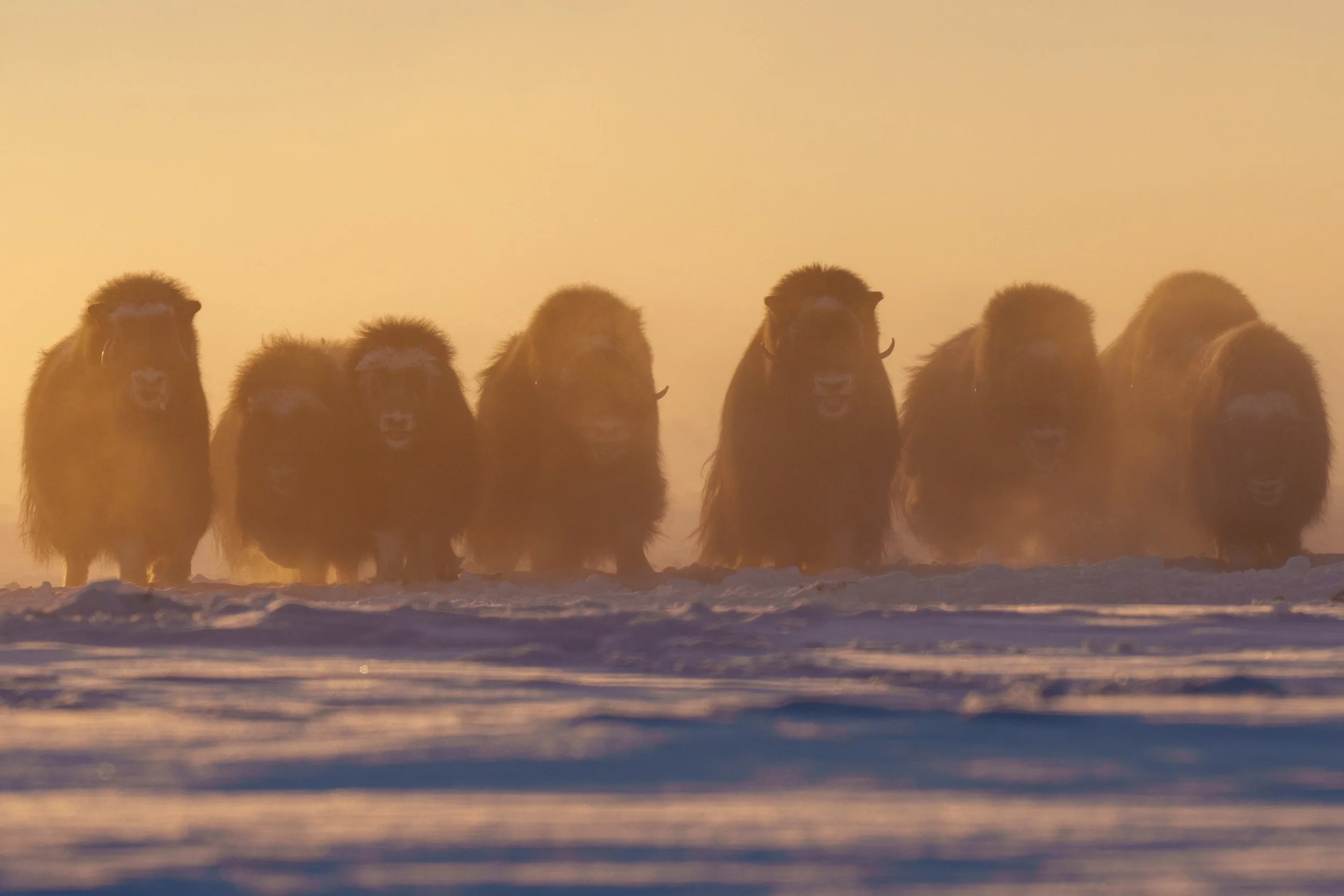
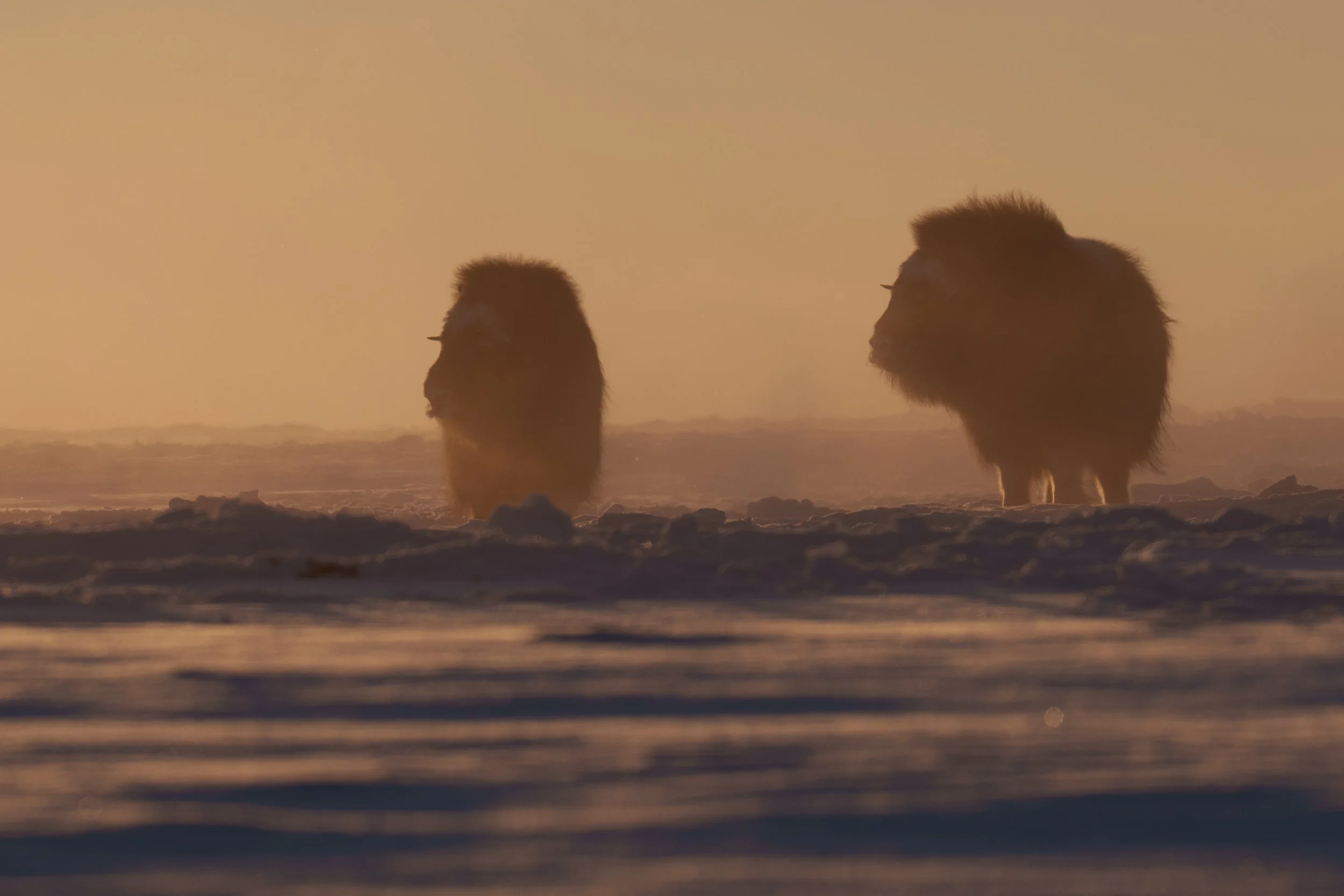
In March, on the sea ice of Scoresby Sund in northeast Greenland, musk oxen form defensive lines against the cold and against whatever approaches. The temperature is minus thirty-one degrees Celsius. At this temperature, breath crystallises on contact with air and hangs as vapour around the animals' bodies, catching the low Arctic sun and dissolving the boundary between form and atmosphere.
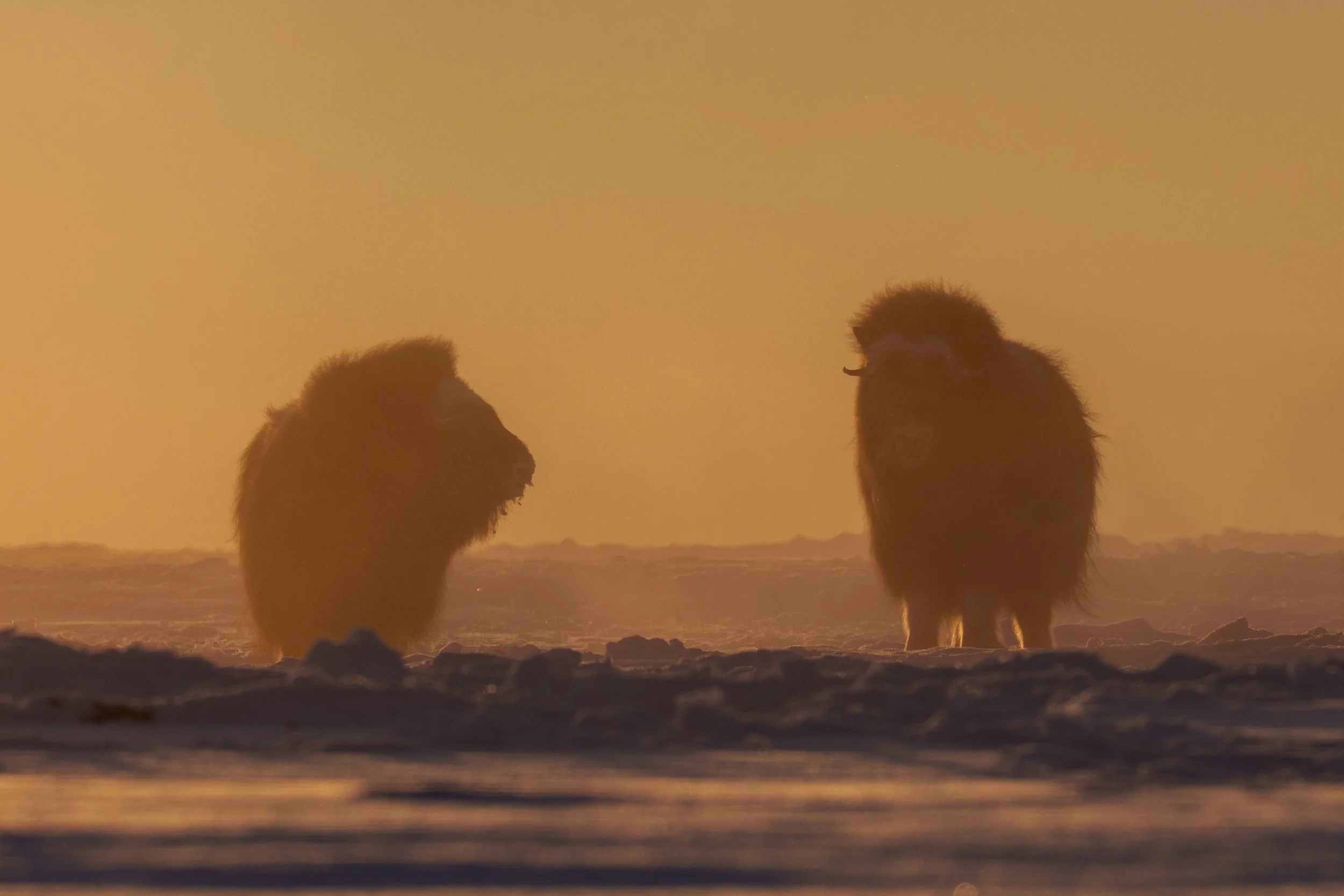
These seven photographs were made over several days in these conditions. The camera was positioned at the animals' eye level or below, often prone on the ice, at distances close enough for the encounter to be mutual. The animals were aware of the photographer's presence. They did not retreat.
The series moves from the distant herd — a silhouette frieze on the horizon, exhaling collectively into golden light — through the individual animal in profile and in stride, to the direct frontal encounter, and returns to the collective in tight defensive formation. The arc traces a closing of distance: from observation to confrontation to recognition. The palette shifts between amber backlight, where the animals dissolve into their own generated warmth, and monochrome, where they are rendered as mass, texture, and gaze.
The musk ox is an Ice Age survivor. Its defensive strategy — to stop running and stand — is fifty thousand years old. The behaviour the title describes is not metaphor. It is what these animals do: they hold ground. The photographs record the conditions through which that holding becomes visible.